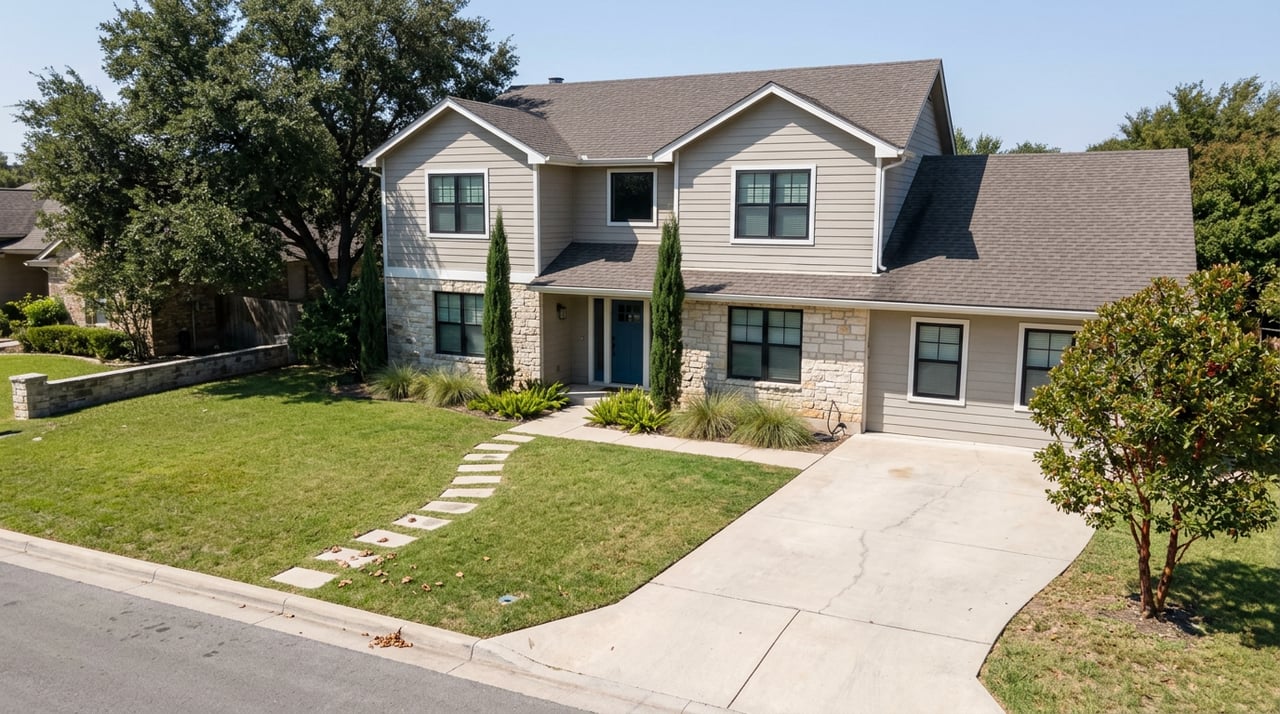
What does it actually mean when a Solano County disclosure packet lists a line for Mello-Roos? Two buyers touring homes the same weekend, one in a newer Fairfield subdivision and one in a comparable Vacaville development, can open nearly identical paperwork and be looking at two entirely different financial commitments wearing the same name.
The standard advice floating around most home-buying guides says to find out when the bonds get paid off. That's sound advice for a lot of California Mello-Roos districts, where a Community Facilities District issues bonds to build roads, sewers, or schools, and once those bonds retire, usually 20 to 40 years after the district forms, the special tax goes away with them. It's the model most people picture when they hear the term. It's also only half the story in Solano County.
The Fairfield-Suisun District Fits the Model Everyone Expects
Fairfield-Suisun Unified School District currently runs two Community Facilities Districts, CFD 5 and CFD 6. The district's own page lays out exactly where each one stands: CFD 5 stopped being assessed as of the 2023-2024 fiscal year, with the final bonds scheduled to retire by August 2025. CFD 6 is still active, assessed at $0.43 per square foot, and that figure was published as running through the 2025-2026 fiscal year.
That's the bond-and-sunset pattern working the way the generic guides describe it. A house built under CFD 5 in Fairfield has already seen its Mello-Roos line disappear or is about to. A house under CFD 6 carries a number a buyer can actually calculate before writing an offer, a 2,200 square foot home comes to roughly $946 a year, and the district's language points toward an eventual end date tied to the bonds behind it. If you're shopping in this district, the follow-up question isn't whether the tax will end. It's confirming the current year's figure directly with the district, since a page written for one fiscal year doesn't automatically update itself once that year closes.
Vacaville Built a Different Kind of CFD
The City of Vacaville runs its own set of Community Facilities Districts, numbered 1 and 8 through 12, and its finance department describes something structurally different from a bond payoff. The city's own language is direct: special taxes are levied annually, subject to an annual inflation adjustment, and they do not expire. They continue in perpetuity.
The reason traces back to what the money is actually funding. CFD 1, formed in the 1980s, was built to cover 25 percent of the cost of Fire Station 74, and it carries the lowest special tax rate in the city's current lineup. CFD 10 and CFD 11, formed in late 2005 and early 2006, were structured around a different requirement entirely, covering the full cost of the police and fire services that a new development requires. That's the detail that changes everything. A bond has a payoff date because it's debt, and debt gets retired. Ongoing police and fire staffing doesn't have a payoff date, because the city keeps providing that service every year for as long as the development exists. So the tax that funds it doesn't sunset either. It rides along annually, escalated using a Bureau of Labor Statistics cost-of-living index for the San Francisco-Oakland-Hayward region, indefinitely.
Two Solano County cities, two answers to the exact same disclosure question. In one, Mello-Roos is a debt repayment schedule with a visible endpoint. In the other, it's a permanent utility bill for municipal services that happens to get collected through the property tax roll.
Why That Difference Shows Up in the Monthly Number, Not Just the Fine Print
Solano County's own price data makes the comparison concrete. As of May 2026, Fairfield's median sale price sat near $607,137, which puts the base 1 percent Proposition 13 property tax at roughly $506 a month before anything else gets added. Suisun City's median ran closer to $529,500 that same month, putting its base rate around $441 a month. Those numbers alone suggest Suisun City is the cheaper carry. But the base rate is only the floor. Everything layered on top depends on which Tax Rate Area the specific parcel sits in, and Solano County has hundreds of them.
This is where the bond-versus-service distinction stops being trivia and starts affecting a monthly budget. A buyer under a bond-financed CFD like Fairfield-Suisun's CFD 6 is paying toward a number that shrinks toward zero on a known timeline. A buyer under one of Vacaville's public-safety CFDs is paying toward a number that only moves in one direction, upward, tracked to inflation, for as long as they and every future owner hold that parcel. Mortgage lenders count both types the same way in a debt-to-income calculation right now, but they don't behave the same way ten years from now. A household that budgets for a CFD assuming it steps down after a decade, when it's actually the permanent kind, has understated its own long-term housing cost. Statewide guidance on Mello-Roos generally puts the total effective tax rate in CFD-heavy areas somewhere between 1.5 and 1.7 percent of a home's value, against 1.1 to 1.3 percent in areas without one. Whether a given Solano County address lands on the low or high end of that range, and whether it stays there or keeps climbing, depends entirely on which structure sits underneath the number.
How the Distinction Shows Up in Escrow, and What to Actually Pull
The seller's Notice of Special Tax discloses the current dollar figure during escrow, which is required paperwork in a Vacaville transaction. What it typically doesn't spell out in plain language is which category that figure belongs to. A dollar amount on a disclosure form looks the same whether it's counting down to zero or resetting upward every year.
The document that actually answers the question is the Rate and Method of Apportionment for that specific CFD number, the formula document that spells out what the tax funds, how it escalates, and whether there's a bond maturity date behind it at all. For a Vacaville property, the city maintains an interactive map where a specific address can be checked against current CFD boundaries. For a Fairfield-Suisun property, the district's own Mello-Roos page names which CFD number applies to which development. Neither of those requires guessing. Both require asking for the CFD number by name rather than accepting "Mello-Roos" as a single category, and then asking whether that number is funding a bond or a service.
FAQ
Does Mello-Roos transfer to the new owner when a home sells? Yes. The obligation attaches to the parcel, not the person who agreed to it. A buyer takes title subject to whatever special tax currently applies, whether that's a bond-financed CFD with years remaining or a service-funding CFD with no scheduled end.
Can I check a specific Solano County address before making an offer? Vacaville's finance department publishes an interactive CFD boundary map that can be searched by address, and Fairfield-Suisun Unified names its active CFD numbers directly on its own site. Both are faster and more reliable than relying on a generic percentage estimate.
Is Mello-Roos tax deductible? Generally the portion that repays construction bonds is treated differently than a standard property tax deduction, and rules can vary depending on how a specific CFD structures its charges. This is genuinely a question for a tax professional who can look at the specific CFD documents for that parcel, not something to assume either way from a blog post.
A disclosure that says Mello-Roos is the start of the question, not the answer to it. The number that matters is buried in a CFD's own formation documents, and in Solano County that number can mean a tax that's already halfway out the door or one that was built never to leave. Merge Real Estate pulls the actual CFD paperwork for a specific parcel before an offer goes in, so the number in your monthly budget is the real one, not the generic range from a search result.