Thinking about buying in Solano County, but worried the monthly payment will stretch your budget? That is exactly why house hacking gets so much attention. If you want a way to live in your property while using rental income to help offset costs, this strategy can be a practical starting point in today’s market. Let’s dive in.
Why house hacking matters in Solano County
House hacking is simple in concept. You buy a property as your primary residence, live in part of it, and rent out the rest.
In Solano County, that idea stands out because local housing costs and rent levels are close enough that even partial rental income can make a real difference. Census QuickFacts reports median gross rent at $2,163, while median monthly owner costs with a mortgage are $2,746. That gap of about $583 helps explain why many buyers look for ways to create income from the home they live in.
Solano County also offers a lower-cost entry point than some nearby Bay Area markets. HUD’s FY 2026 Fair Market Rent schedule shows a 2-bedroom benchmark of $2,178 in the Vallejo, CA MSA, compared with $2,912 in Oakland-Fremont and $3,604 in San Francisco. If you want Bay Area access with more room to make the numbers work, Solano County deserves a close look.
What house hacking can look like
House hacking is not just one type of property. In Solano County, a few setups tend to come up most often.
Duplexes, triplexes, and fourplexes
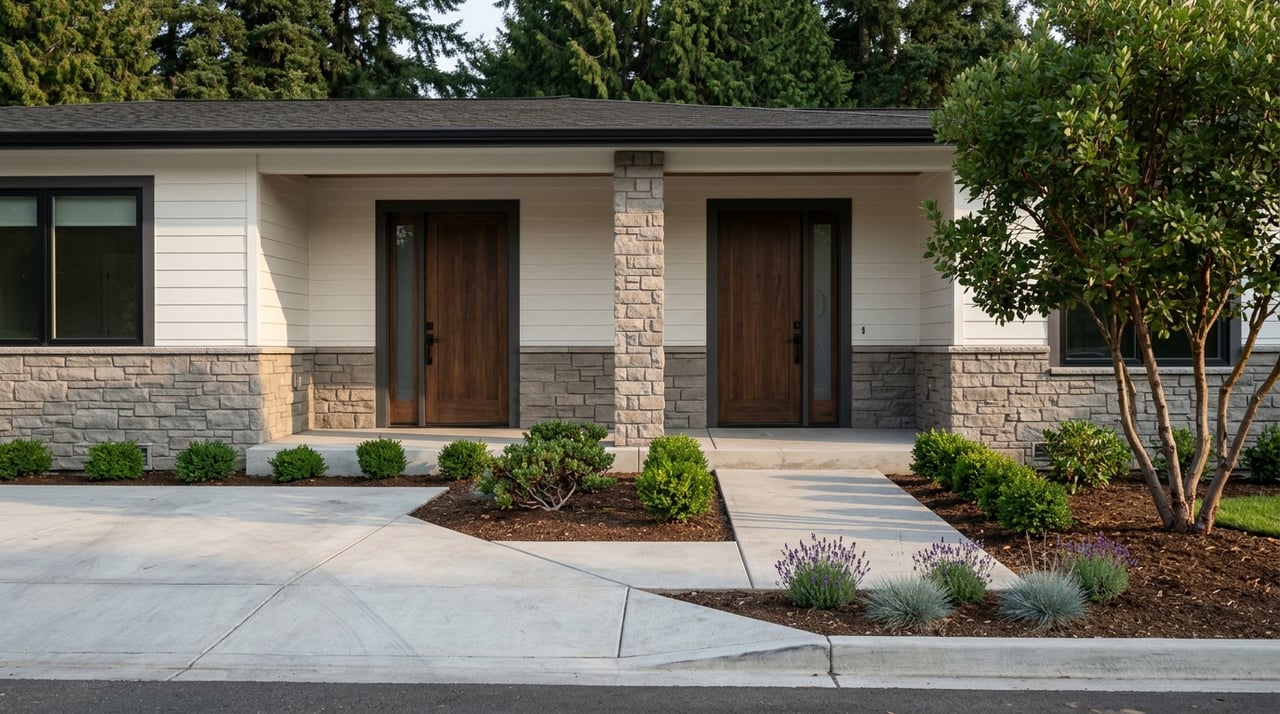
Small multifamily properties are the classic house-hack option. You live in one unit and rent the others, which can create more predictable income than renting a room in a single-family home.
HUD states that FHA-insured financing is available on 1-4 unit properties, which is one reason these homes stay popular with owner-occupant buyers. The key is that the property and borrower must meet lender and occupancy rules.
Single-family homes with an ADU or JADU
Another common path is buying a single-family home that already has a legal ADU or JADU, or buying one with the potential to add one later. Solano County describes ADUs and JADUs as additional housing units on residential lots that can be used for family housing or rental income.
You may also hear these units called a granny flat, in-law unit, or backyard cottage. In unincorporated Solano County, county planning rules apply. Inside city limits, you need to check with the specific city planning department.
Renting part of a primary residence
Some buyers start smaller by renting a bedroom or creating a separate living area within a single-family home. This can be a lower-barrier version of house hacking, though the income picture is usually less straightforward than with a legal second unit or multifamily property.
For loan qualification, documented rental income may be considered in some cases. That is one reason realistic rent estimates and clear documentation matter from the start.
Solano County rent benchmarks to use
When you are estimating income, it helps to begin with a neutral benchmark. HUD’s FY 2026 Fair Market Rents for the Solano County and Vallejo MSA area provide a useful starting point for gross rent, not net cash flow.
Here are the current benchmarks:
- Studio: $1,567
- 1-bedroom: $1,705
- 2-bedroom: $2,178
- 3-bedroom: $2,911
- 4-bedroom: $3,297
These figures are gross rents and include most tenant-paid utilities. That means they are best used as a rough top-line estimate, not as a final cash flow number.
Example rent scenarios
A duplex with a 2-bedroom rental unit might be modeled around the $2,178 benchmark as a starting point. A legal ADU or JADU may fit closer to the studio or 1-bedroom range of $1,567 to $1,705, depending on size and setup.
If you are looking at a triplex or fourplex, the 3-bedroom and 4-bedroom benchmarks of $2,911 and $3,297 can help frame the opportunity. Still, actual rent potential depends on legal unit count, layout, condition, and which utilities the owner pays.
Financing basics for first-time house hackers
For many first-time buyers, FHA is the easiest official loan program to understand when exploring house hacking. HUD says FHA down payments can be as low as 3.5%, and the program is available on 1-4 unit properties.
That matters because it opens the door to owner-occupied duplexes, triplexes, and fourplexes for buyers who may not have a large down payment. FHA financing is intended for borrowers who will use the property as their primary residence, so occupancy rules are a central part of the plan.
Can rental income help you qualify?
In some cases, yes. CFPB commentary says rental income from a multiple-unit property where you live in one or more units and rent the others may be used, and income from roommates or boarders in a primary-residence single-family home can also be acceptable if it is documented.
This is where buyers need to stay practical. Estimated rent is not the same thing as usable qualifying income. Lenders typically want documentation, and conservative assumptions are usually the safest way to analyze a deal.
Solano County loan limits
If you are shopping different property types, loan limits matter. Solano County’s 2026 conforming loan limits are:
- 1 unit: $832,750
- 2 units: $1,066,250
- 3 units: $1,288,800
- 4 units: $1,601,750
With the county’s median owner-occupied home value reported at $617,700, many single-family purchases may fall within the one-unit conforming cap. Small multifamily properties can still work well, but they often require more careful planning around price, down payment, and financing structure.
ADU rules to understand first
ADUs are a major part of the house-hacking conversation in California, but buyers need to look beyond marketing language. The most important question is whether the unit is legal and recognized by the correct local authority.
California HCD says the state’s ADU handbook was updated in March 2026 to reflect changes effective January 1, 2026, and it describes ADU applications as ministerial rather than discretionary. In plain terms, the state has worked to streamline the approval path, even though local standards still apply.
County rules versus city rules
In Solano County, ADUs and JADUs are allowed only on residential lots, while agricultural lots follow a different secondary-dwelling framework. County zoning rules apply only in unincorporated areas.
If the property is within a city, you need to review that city’s planning standards instead. This point matters more than many buyers expect, especially when a listing mentions a garage conversion, detached unit, or rear cottage.
Pre-approved ADU options and fees
Solano County also offers a pre-approved ADU program. The county’s ADU guide notes that public facilities fees are waived for ADUs that are 749 square feet or smaller, and prorated for larger units based on the primary dwelling size.
Permit fees still depend on size, location, and project valuation. If you are buying with plans to add an ADU later, these details can shape your timeline and your budget.
What to check before you buy
A promising house-hack property is not just about the asking price. You also need to confirm that the income setup is legally supportable and financially realistic.
Verify legal unit count
Start with the legal unit count, permit history, and jurisdiction. If a listing describes a converted garage, separate entrance, or backyard unit, verify whether it is a legal ADU, JADU, or secondary dwelling before you rely on projected rent.
That is especially important in Solano County because county rules and city rules differ. A space that looks rentable is not always a legally recognized unit.
Separate gross rent from cash flow
HUD’s Fair Market Rents are gross rents, which include most tenant-paid utilities. If you as the owner will be paying water, gas, electricity, or other services, your actual cash flow may look very different from the benchmark.
That is why a solid house-hacking analysis should break out:
- Estimated gross rent
- Mortgage payment
- Property taxes and insurance
- Utility costs
- Maintenance and repairs
- Vacancy or turnover assumptions
Match the property to your lifestyle
House hacking is a numbers strategy, but it is also a lifestyle choice. Living next to tenants, sharing walls, or managing an ADU on your lot can work well for some buyers and feel stressful for others.
The right property is not just the one with the best spreadsheet. It is the one that fits your budget, your tolerance for hands-on management, and your long-term housing goals.
Best starting options in Solano County
If you are just getting started, a few options tend to be the most practical.
Option 1: Owner-occupied duplex
This is often the cleanest first step. You live in one side and rent the other, which makes the income stream easier to estimate and easier to explain during financing.
Using HUD’s 2-bedroom benchmark of $2,178 as a rough starting point can help you compare opportunities. Actual performance still depends on condition, utility setup, and legal unit configuration.
Option 2: Single-family home with legal ADU
This option can offer more privacy than a duplex while still creating rental income. It may also appeal to buyers who want flexibility for future use.
A legal ADU or JADU may pencil out closer to the studio or 1-bedroom benchmark range of $1,567 to $1,705. The big advantage is versatility, but the legal status of the unit needs to be clear.
Option 3: Triplex or fourplex
This can produce stronger income potential, but the purchase, underwriting, and management process can be more complex. It is often better suited to buyers who are comfortable evaluating multiple leases, utility responsibilities, and larger financing numbers.
For the right buyer, it can be a powerful long-term move. The tradeoff is that you need tighter planning and stronger due diligence.
A smart way to approach your search
If you want to house hack in Solano County, start by defining your comfort zone before you start touring homes. Know your monthly budget, your financing range, and whether you prefer a duplex, a single-family home with an ADU, or a larger multifamily setup.
Then review each property with a simple filter: Is the unit count legal, is the rent assumption realistic, and do the local rules support the plan? That kind of disciplined approach can save you from chasing listings that look great online but do not hold up in practice.
House hacking can be a practical way to get into the market, reduce your monthly burden, and build flexibility into your housing plan. If you want help evaluating Solano County opportunities with a clear, local lens, connect with Merge Real Estate.
FAQs
Can you use FHA for a duplex in Solano County?
- Yes. HUD says FHA-insured financing is available on 1-4 unit properties if the property and borrower meet owner-occupancy and underwriting rules.
Can rental income help you qualify for a Solano County house hack?
- In some cases, yes. CFPB commentary says rental income from multiple-unit properties where you live in one or more units, and in some cases income from roommates or boarders, may be used if documented.
What rent should you estimate for a Solano County ADU?
- A rough gross-rent starting point is HUD’s studio-to-1-bedroom range of $1,567 to $1,705, depending on the unit’s size and setup.
Do ADU rules change between Solano County and its cities?
- Yes. Solano County rules apply in unincorporated areas, while properties inside city limits must follow that city’s planning department rules.
What should you verify before buying a house-hack property in Solano County?
- Confirm the legal unit count, permit history, local jurisdiction, utility setup, and whether projected rent is based on a legal and documented use of the property.